
While Memorial Day may mark the unofficial start of summer—with backyard cookouts, long weekends, and time spent outdoors—at its heart, the federal holiday is rooted in remembrance. It’s a time to honor the millions of brave Americans who lost their lives defending our country and reflect on the sacrifices made throughout history.
That’s why one small flower, the red poppy, carries so much meaning this time of year. For more than a century, it has served as a symbol of remembrance and hope. You’ll often see it everywhere from veterans’ memorials to front porch planters and table centerpieces. Whether you spot them pinned onto jackets or arranged in bouquets, these beautiful blooms offer a meaningful reminder of the holiday’s deeper purpose.
So when did the red poppy became a national symbol of remembrance and how did this particular bloom become the official Memorial Day flower in the first place? To explain, let's rewind all the way back to the early 1900s.
Why Do We Wear Poppies on Memorial Day?
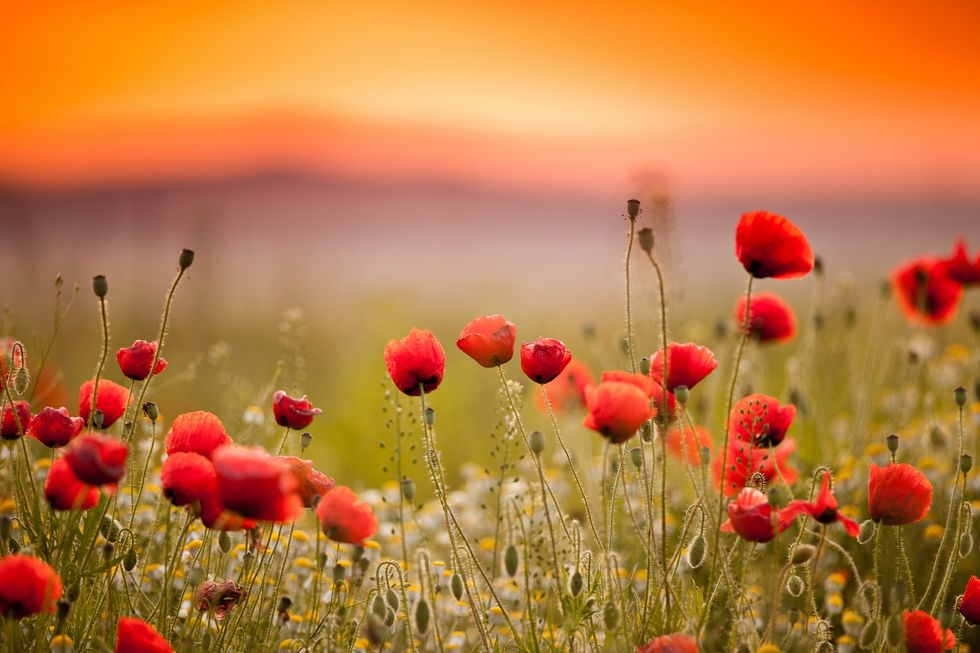
There are so many lovely wildflowers, so why the red poppy? These brilliant annuals are resilient little things—they can grow and thrive in the harshest landscapes, including battlefields. According to The American Legion, the significance of this flower arose during the Great War (now known as World War I). The once bucolic fields around Flanders, Belgium, had been decimated by the bombardments of battle. Yet among the rubble and bloodshed, these brilliant beauties were able to bloom.
Allied battle surgeon and poet Lieutenant Colonel John McCrae was deeply moved when he saw the otherwise barren meadows blanketed in a brilliant display of color. It was the spring of 1915, just after a battle that resulted in the deaths of 87,000 Allied soldiers. McCrae responded to the sight by composing a poem on the spot, written from the perspective of those who had perished. The poem was published in Punch magazine later that year and would become one of the most famous works to emerge from the First World War.
"In Flanders Fields" by John McCrae
In Flanders fields the poppies blow
Between the crosses, row on row
That mark our place; and in the sky
The larks, still bravely singing, fly
Scarce heard amid the guns below.
We are the Dead. Short days ago
We lived, felt dawn, saw sunset glow,
Loved and were loved, and now we lie
In Flanders fields.
Take up our quarrel with the foe:
To you from failing hands we throw
The torch; be yours to hold it high.
If ye break faith with us who die
We shall not sleep, though poppies grow
In Flanders fields.
On September 27, 1920, the first chapter of The American Legion made the poppy its official flower to memorialize those who fought and died. In 1922, the VFW began national distribution programs around the country to support the cause, and in 1924, The American Legion followed suit.
Who Started the Tradition of Wearing Red Poppies on Memorial Day?
According to History.com, Americans owe the tradition of wearing a red poppy on Memorial Day to Moina Michael. She was a professor at the University of Georgia who was on a leave of absence and volunteering with the YWCA to workers overseas when she read McCrae's poem in Ladies’ Home Journal. In addition to writing her own response poem called “We Shall Keep Faith,” she vowed to wear a poppy as a symbol.
After the war ended, Michael began making fabric poppies to raise money to support veterans, eventually convincing Georgia’s American Legion to adopt the symbol in 1920. But it took another woman, Anna Guérin, to convince the rest of the Legion chapters to also adopt the poppy as their symbol the following year. She then helped spread the tradition throughout Europe.
What's the Symbolism of Poppies in Other Countries?
The poppy is arguably better known as a symbol of remembrance in other parts of the world and their timing differs from the U.S.A. Citizens in the U.K., Canada, France, Belgium, Australia, and New Zealand wear the red flowers on November 11 each year to commemorate the anniversary of the 1918 armistice (Remembrance Day).
Who Gives Out Poppies on Memorial Day?
The VFW (Veterans of Foreign Wars) and The American Legion still hand out poppies to this day. As part of the VFW's "Buddy Poppy" program, volunteers will offer poppies in exchange for donations to state and national veterans' rehabilitation and service programs. What's more, disabled and otherwise in-need veterans are paid for their work to assemble the poppies in VA hospitals around the country. You can learn more at the VFW's website.
Similarly, the American Legion Auxiliary leads their distribution efforts, requesting that a recipient donate to support the future of veterans as well as active-duty military personnel and their families. Donations help fund their medical and financial needs. To learn more about participating, you can head to The American Legion website.
How Can I Observe Memorial Day With Poppies at Home?
Beyond wearing poppies as a symbol of remembrance, they’re also a meaningful way to honor the brave Americans we’ve lost, at home. Try a simple vase of fresh poppies on the kitchen table, or fill a porch planter with the bright and happy blooms.
If fresh ones are hard to come by, opt for faux poppy stems woven into a red, white, and blue-themed wreath. All of these sweet ideas can add a thoughtful touch to the holiday weekend.
Many families also incorporate poppies into Memorial Day get-togethers by placing small arrangements near framed family photos, serving tables, or wherever they are entertaining outdoors. The flowers bring a soft, natural beauty to the day while still honoring the spirit of remembrance behind the holiday.
If you’re arranging fresh-cut poppies, keep in mind that the delicate stems can wilt quickly. Briefly sealing the ends in hot water before placing them in a vase may help them last a little longer.
Whether worn on a jacket lapel or displayed in a simple backyard bouquet, red poppies remain one of the most enduring symbols of Memorial Day, and a beautiful reminder to pause and remember those who served.
AnnMarie Mattila is the Senior Editor for The Pioneer Woman, covering a wide range of topics from food and cooking to home, beauty, style, and more.


